Tuesday, November 17, 2015

Wisconsin's Clean Energy Manufacturing Revolving Loan Fund

(servicing a wind turbine, from siemens.com)

It is hard to argue against the idea that Western style capitalism and the search for ever-growing profit and development is a major source of today's environmental woes.  Those systems are still in place, and largely control the flow of resources over much of the planet, and so must be utilized in a beneficial way to right the wrongs of the past.  A large portion of the power of market-based environmental solutions lies in the ability for actors to work on problems while still working in their own best interest.  This, in turn, gives more flexibility and choice to consumers, instead of old-style regulation that, some contend, limits choice.

Energy markets in the West, however, are usually semi-private monopolies or occasionally oligopolies, and so are difficult markets to enter.  One way to promote a healthy marketplace, with increased diversity of industries, greater consumer choice, and disruption of ponderous monopolies, is to give a boost to smaller businesses that are working toward establishing alternative energy sources as viable on a broad scale.  The energy monopolies, such as WE Energies locally, tend to try to fight the threat posed by alternative decentralized energy industries to their revenue streams, and it can be very difficult for small companies not just to compete, but also to convince the public of their viability.

One such program in Wisconsin is a revolving loan fund that "makes low interest financing available to private companies to invest in energy efficiency and waste reduction projects", as described by the Wisconsin State Energy Office.  Revolving loan funds are common programs similar to microcredit, giving financing to usually smaller businesses in a specific region or sector that could normally struggle to find sufficient capital.  The fund is refilled as loans are paid off by these businesses repay their loans, and this money becomes available for new loans as it is replenished.

This particular program currently stands at 20 loans, totally $38 million, and is run jointly by the Wisconsin Economic Development Corporation and the Public Service Commission of Wisconsin.  The WSEO states that the program intends to specifically target the food industry.  These low interest loans are available for up to $1 million for private businesses.  The WSEO website contains a list of companies that have achieved success in this program.  They are from a wide range of industries (cheesemaking, manufacturing, post-consumer recycling, waste-to-fuel conversion, and more), which appears to be a sign of a healthy and successful program.  As the alternative energy industry explodes, these small loans will help solidify an entire economic sector for the future, providing much needed evidence of the ever-important cost efficiency of sustainability.

Sunday, November 15, 2015

Great Plains Institute - Better Energy. Better World.


Home

A Think Tank with Action.

As time goes on and the need for cleaner technologies increases, the collaboration between investors, corporations and other individuals becomes a necessity. There are a number of clean technologies that need to be implemented around the world, with a focus on the larger emitters; however, if every institution goes and attempts this transition on their own, many opportunities could and will be missed. There is a nonprofit organization which exists that facilitates the connections between these institutions named the Great Plains Institute. The GPI acts as an “in” for institutions with differing opinions and ideas for transitioning to cleaner technology to develop methods and technologies which might not have been conceived.

The GPI was created after a small group of people asked themselves, ‘”What if there was a place where people with different opinions about how to provide clean, secure energy for generations could come together and create common solutions?’” This had happened in 1997 and since then they have made quite a few accomplishments.

They focus on energy efficiency, infrastructure, renewables, transportation and international collaboration. Some of their current projects include a Midwest Renewable Energy Tracking System, a new infrastructure for alternative transportation, creating energy  models for the future of Minnesota (Where they are based) and GreenStep Cities.

GreenStep Cities is a program which is voluntary. Its mission is to increase the quality of life of Minnesota cities through known environmental practices such as lighting, transportation, land use, management and community development. GreenStep Cities won two Environmental Initiative Awards for 2012:  Sustainable Communities Project of the Year and Partnership of the Year.

           Battle Lake Compete Streets Before and After          

One of the initiatives GPI had created was Powering the Plains (PTP). Its goals were to…
-        -   Realize the region’s full energy potential
-        -   Add value to agriculture
-        -   Stimulate economic development
-        -   Reduce risks of global warming

PTP’s goals were supported by GPI’s main goals, which are to…
-          - Develop better energy policy via consensus
-        -   Catalyze deployment of the best energy technologies, practices & programs
-        -   Provide reliable analysis & decision tools

What GPI actually does is meet up with companies and investors and figure out what their goals are regarding the clean technologies and environmental growth. Not only does GPI help with formulating what the best options are for the companies based on financial feasibility, location, renewable energy potentiality amongst other factors. They will also help in the development of policies and regulations; addendums and brand new ones that will affect in a more efficient or strict way of how things are done. I suppose they could be taken up with the state, but from what I gather, these policies are solely for the collaborating industries that participate with GPI.

GPI is a network-based form of governance. They collaborate and share information among many different entities and give develop solutions based on the needs of many participating organizations, which can be carried out with the assistance of GPI as well. They are a non-governmental non-profit organization which is funded mostly by charitable foundations and corporations with some help from individual investors as well.


http://www.betterenergy.org/

Tuesday, November 3, 2015

Clean Power Plan and Wisconsin

I want to talk about the Clean Power Plan and more specifically what it means for Wisconsin. The Clean Power Plan (CPP) was announced by President Obama, August 3rd 2015. The CPP is aimed at power plants to reduce their carbon emissions. Nationally it would seek to cut carbon dioxide emissions from 2005 benchmarks by 32% by 2030. It requires states to meet specific emission reduction marks based on the state’s overall energy consumption, and the amount of natural gas and coal power plants, with the heaviest cuts coming to the coal reliant states. The plan would set “building blocks” for achieving the necessary emission cuts. These “building blocks” include increasing use of renewable energy, increasing the efficiency of coal and gas burning plants, and moving away from coal plants to less carbon emitting natural gas. Some of these shifts are already taking place, the CPP seeks to set required levels and seeks to hasten the pace.  It also offers a Clean Energy Incentive Program, which would promote “early development of renewable energy and energy efficiency.” This program seeks to reward states for investing in renewable rather that making coal more efficient or switching over to natural gas to reduce carbon emissions. There is hope that the CPP will show the UN during the COP in Paris this December, that the U.S. is committed to cutting its national emissions, and that other countries would do the same. The CPP is a form of hierarchical mode of government, which is passed by President Obama, and regulated through the EPA.


What does this mean for Wisconsin?


Wisconsin is a state that is heavily reliant on coal produced power, and has some of the most stringent emission cuts necessary. In 2012 its emissions were 42,317,602. The plan requires WI to cut its emissions by 33.9% to 27,986,988 by 2030.

State and National critiques of the plan site price spikes and power shortages, renewable energy isn’t as efficient and reliable as coal. They also talk about the affordability of coal. It argues that these are unrealistic levels and that cutting the emissions to power plants doesn’t do much in the way of global climate change.  Completely ignoring the overall health benefits from cleaner air. They cry about how China and India pollute more and that climate change is a natural process, not anthropogenic.  Wisconsin is one of 26 states that are suing the U.S. government to repeal the plan. Wisconsin’s currently is lagging behind in moving towards renewable energy. WE energies has tried to tax the installation and use of solar panels, thus impeding a shift towards renewable energy, and putting emphasis on coal power.  Since 2008, Wisconsin has opened up “cleaner” coal powered plants in Wausau and Oak Creek which account for roughly 13% of the state’s carbon emission.  Wisconsin is more likely to utilize the shift to natural gas and more efficient coal power building blocks, rather than update into the renewable energy movement.

What are ways in which Wisconsin residents can demand taking the shift to renewable energy building block rather than prolonging our use of fossil fuels?


sources:

Lake Michigan Offshore Wind Energy Act - Illinois

Lake Michigan Offshore Wind Energy Act

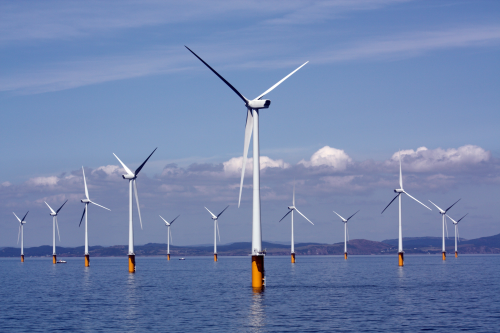
Wind energy has always been interesting to me and I never quite understood what types of regulations and research went into them. There are a bunch of factors such as wind currents, peak hours, location, and visibility, among others that show up when figuring out if an area is suitable or not for offshore wind farms.

On August 16th, 2013, the state of Illinois had passed the Lake Michigan Offshore Wind Energy Act. This act was to require the Illinois Department of Natural Resources (IDNR) to create a “detailed offshore wind energy siting matrix”. This matrix looked at the factors I just mentioned to determine if certain locations on Lake Michigan are adequate for offshore wind farms. Based on what the results of the siting matrix had shown, the IDNR was then able to allow the assessment permits and leases to those areas which were suitable. After the assessments had been completed, the authorization to convert said assessment permits and leases to construction and operations had happened.


The mode of government involved with this act is hierarchical. There will, eventually, be a market for the energy produced by these offshore wind farms, but the bill going through house and senate is the key factor. There aren’t really any NGOs at work here, but how would they? The lakebed is “owned” by the state, leases and permits for assessments are through the IDNR and the upkeep and maintenance is managed by the Economic Development Policy Task Force
.
There are a few actors involved in the creation of the LMOWEA. The state of Illinois itself, the IDNR and an Offshore Wind Energy Economic Development Policy Task Force. I don’t have much experience or knowledge in the creation of bills, acts and the like, but after seeing the brief synopsis of this individual act, it doesn’t leave much to the imagination of what other things that might have been overlooked.

This Offshore Wind Energy Economic Development Policy Task Force, which the LMOWEA actually created, is in charge of “analyzing and evaluating policy and economic options to facilitate the development of offshore wind energy and proposing an appropriate Illinois mechanism for purchasing and selling power.”

Kevin Borgia, the public policy manager at Wind on the Wires (which works with wind energy in the Midwest) said, “’we are light-years away from putting wind turbines in Lake Michigan.”

This is no surprise as EVERYTHING takes FOREVER to get done. The different stages of research, of authorizing leases and permits, converting them to construction, the calculations, the approvals/denials, and the construction.

I am just glad it is happening, because there are always those rich homeowners with a lakefront view who are extremely against the idea.


Monday, November 2, 2015

Dane County judge strikes down WE Energies new fees for customers with solar systems

On October 30th, 2015, a Dane County Circuit Court judge ruled that WE Energies is not allowed to assess extra fees on customers that generate some of their own electricity with home solar systems. This is a key example of traditional government using its power to further environmental sustainability and solidify renewable energy as a viable option for the near future. The charge imposed by WE Energies was supposed to be a so-called “rate-fairness” policy intended to make up for revenue lost to consumer generation. However, it appears far more like a punitive measure meant to discourage decentralized power sources outside of the power utility companies' monopolies. The program was widely unpopular with a broad section of the general population. The extra fees were to begin next year, but will not be implemented as things are currently. The lawsuit was filed by The Alliance for Solar Choice (www.allianceforsolarchoice.com), a collection of large rooftop solar companies. TASC has a variety of solar promotion projects across the country.

According to the Milwaukee Journal-Sentinel (), the rate increase would have come to roughly $19 per month for homes with average photovoltaic solar systems. This is a quite substantial price hike, and is about a quarter of the money saved by generating customers. These figures are provided by Renew Wisconsin (). PV systems are still fairly expensive, and it takes a significant amount of time to make them cost effective. This fee dramatically increases that time period, likely discouraging people from installing home solar panel systems. Other rate changes and increases are still going through.

The conflict between the new industry of renewable energy traditional utility companies and their market monopolies and allies in the fossil fuel extraction industry is quite obvious. WE Energies states that the increase is necessary to meet potential increased demands on the power grid due to CG customers using the normal grid when the solar systems are not generating, but those customers still pay for electricity they draw from the grid. Renewable advocates think that they are protecting their monopolized market share by discouraging leaving the old centralized power system, instead. The solar companies are, of course, not being altruistic. They would like to break into the power market and make potentially huge profits from their own products, but the average homeowner benefits greatly by having an alternative option for electricity generation. For renewable systems to really take off and threaten the utility monopolies, enough people need to be willing to take the leap, and making sure consumers are not punished for simple market choices is both a step toward solidifying the renewable industry and a victory for choice and open markets.