Wednesday, December 2, 2015

Alternative Energy in Wisconsin and its Place in Governance


The Midwest Renewable Energy Association plays a fundamental role within environmental governance in the region, specifically promoting solar systems.  They work above myriad smaller actors, such as Grow Solar, to ready the area for the transition to a more open energy market, where decentralized sustainable energy sources are viable options for consumers.  The manner in which these groups work towards this goal is detailed in the previous post Grow Solar - A Midwest Partnership to Move Markets.  Grow Solar and the MREA especially are excellent examples of the emerging place of environmental governance in society, as illustrated by the eight hypothesis posited by JP Evans.  Those that appear most immediately relevant follow.

There is very little that can be done above the personal or community level to promote sustainability without in some way interacting with the market.  American-style capitalism guides the formation of the public's feelings on alternative energy in all directions.  Some see an unnecessary expense in the short term with an uncertain future, some a necessary transition to a more sustainable future.  Some simply see room for innovation and the profit innovation and change can bring.  No matter what the personal opinion on renewables, people as a whole like to have a variety of choice, and, indeed, that choice contributes to healthy markets.  Grow Solar working to clarify and unify regulations and to ease restrictive or punitive fees, as an example, go a long way to opening a previously, somewhat artificially, closed market to a new competitor.  Evans is correct in that these systems are not going to disappear any time soon, and making the sometimes hostile marketplace more friendly to renewables is necessary now, before the monopolies can do more to keep disruptive technology out of the market.

It seems that changes in cultural values do not amount to much if there is no infrastructure, or even a hostile one, to fuel change.  Similarly, attempting to make major shifts like the switch to renewables without the private sector and the priorities of the people being ready amounts to top-down ordering of change.  This is always unpopular and has many problems.  They work to educate the populace and leaders alike, to prepare the private sector with job training and the like,  and to ease civic impediments and hassles.  The variety of approaches and vectors of action makes the work these groups do more robust and likely more effective.  It simply will not do any good to have trained PV solar technicians if people are scared away from installing a rooftop system by zoning regulations and fees, and vice versa.

The interaction of these two organization has a necessarily dualistic structure.  The MREA helps to coordinate and facilitate communication between many, many groups across a very wide area.  Grow Solar works on a more local level.  Each is needed to ensure effectiveness of the other.  The MREA's regional efforts help ensure that groups like Grow Solar are on the same page across distances.  They have a way to share information, tactics, and people easily, as well as having the larger, more unified body needed for interacting with organizations as large as huge corporations and the various federal and state government agencies.  In turn, the finer resolution focus of Grow Solar makes any work they do far more effective than if the MREA attempted to do it themselves.  The two scales are necessary to ensure they have a loud enough voice but still enough clarity to account for local differences.

Alternative energy plans involve public infrastructure.  Just as there is no way to escape the marketplace above the personal level, there is no way to work in energy without interacting with the government.  Fossil fuel companies and energy monopolies like WE Energies generally have the backing of the state, and they not going to just idly allow decentralized energy production disrupt their profits.  In this area, the government has a very important role to play in protecting a vulnerable fledgling industry from the predations of the existing hegemony.  WE Energies's attempt to implement an apparently punitive surcharge for home-generating customers clearly shows the sort of tactics that can be used to dissuade people from making even a partial switch to green energy.  Anti-competitive actions like that are inimical to a healthy marketplace and are exactly the sort of thing the government is suited to protect against.  The tricky area is in ensuring the pendulum does not swing to far in the other direction, since in many areas regulations and taxes are being used to squelch the growth of renewables.  Again, this is a reason why Grow Solar's approach is extremely important.

Overall, the future is not as dark as it may seem to some.  The multifaceted and wide-ranging approach of the MREA is helping to make serious headway on a problem that will otherwise only get worse as time go on.  It is a positive sign that, instead of just fighting against negative things in the present situation, they are working also to prepare for the future.  The extensive job training and certification plans the MREA coordinates through smaller groups, along with regulatory reform, are surely a major way of moving forward and making it so that not only are the renewable energy sources possible to implement, but that they are actually within reach.

Tuesday, December 1, 2015

Reducing energy and transitioning to renewable sources: A State-led partnership

Reducing our energy use and transitioning to renewable energy is a major issue we face today and will play a key role in our ability to live sustainably as well as combat global climate change. The topic covers micro-scale all the way to the global scale. To solve these issues many different institutions and actors are needed. One such actor is the Environmental Protection Agency. As a governmental agency it is a form of hierarchal mode of governance.  Through giving grants for research and development, sponsoring partnerships, environmental research, educational outreach and policy development and enforcement, the EPA has wide reaching arms. The EPA was a key actor is developing the Clean Power Plan which has been passed by President Obama, giving the EPA the task of enforcing its regulations. It seeks to regulate fossil fuel emissions with incentives to leave behind dirty nonrenewable fuel sources for cleaner more sustainable renewable energy.

In looking at the “State” as an actor there are a few hypothesis J.P Evans talks about in which I think are key for reducing energy and transitioning towards renewable energy.  First “Government Matters” mentions how the scale and speed of change necessary to combat global climate change needs to be faster in order to make an impact. I believe that the State must take strong direct action. Right now the policies in my opinion on not strong enough. They allow for mitigating emissions or buying the ability to emit more. This just prolongs the use of dirty fuel sources. The energy companies want to milk what they have for every cent they can get. The slow and small steps towards less emissions is nothing compared strong policy and incentives for the transition to renewable energy sources. Rather than spending money and resources to mitigate our use, it could be better spent developing and implementing renewable energy on both small and large scales.  Another hypothesis that stood out for me was that of “Getting a mix of approaches right is critical”. Each mode lends different strengths and weaknesses, so finding a concoction of modes would greatly increase the effectiveness for tackling environmental problems. A multi-prong approach would be much more effective as well as heard by many more people with attempts to reduce energy.  While market governance can help innovate energy or green technology, and reduce our energy use, I do not think it is the best approach for transitioning to renewable energy. It can help with more efficient appliances, houses and electric cars, but as far as the energy grid goes, I am a strong believer in strong hierarchal governance and policies to not only steer in the right direction, but a little push as well.  For reducing energy consumption and transitioning to alternative forms of energy, I think J.P. Evan’s eight hypothesis are spot on. It takes into account real world applications and externalities that arise while trying to tackle wicked problems. While I do agree with the statement “Governance is about evolution, not revolution”, I do think some environmental problems, and in this case transitioning to alternative energy need a bit of a revolution to hasten the evolution. 

Public Participation in the World of Renewable Energies


There are many strengths and weaknesses of every actor involved in solving a part of the problem that is climate change. Within the actors and regulations that have been involved with my group’s blogs, there are some obvious and not so obvious flaws or benefits which might hinder the solutions to our problem.

One of the main issues is public participation; or rather the lack there of.

With the regulations provided, the Lake Michigan Offshore Wind Energy Act and the Clean Power Plan, public participation is seemingly non-existent. Created by the Illinois State and President of the United States of America, it doesn’t seem that any public participation was even offered. There are bound to be people who would complain of offshore wind farms, or that the CCP for industries was not as strict as it could be. This may be a good thing, as these regulations are encouraging for the renewable energies market and better for the environment.

It was mentioned in class today that the public won’t be too upset if given fair notice or the opportunity to voice their opinions; but if no notice or warning is given, then certain individuals will rage.

As far as our actors go, I think the most limiting (or attempted to limit) solutions towards the problem is WE Energies. With wanting to receive energy made from home-owned energy collection and fighting the “threat posed by alternative decentralized energy industries”, it seems quite obvious that money is their highest priority, and not the environment. This sets up the public participation as absent and is represented by a form of manipulation.

On a better note, the other actors such as the Natural Renewable Energy Laboratory (NREL), Grow Solar and the Great Plains Institute (GPI) are great examples of informing and consulting forms of participation. When the GPI and NREL collaborate with businesses (large and small), local communities and NGOs are invited and encouraged to participate to help develop solutions for whatever the unanimous goal is.

One thing that J.P. Evans brings to light in his final chapter of Environmental Governance is that with public participation there are some downfalls which become an issue for this particular topic, as opposed to others.

Asymmetry - He mentions that stakeholders are all suggested to all have equal attention with like-minded goals however, depending on the project size, location and content, not everyone will be content with how the solution is developed.

This particular drawback can be seen with GPI. While collaborating with many different institutions and developing policies and regulations, it is very unlikely that everyone will be happy in the end.

Expert Bias – Many institutions are what J.P. Evans says are, “stuck in the mindset that only experts can answer policy questions.” He backs this up by providing the concept of Decide-Announce-Defend (DAD).

This one can be seen with Grow Solar. Within city specific projects, the consulting and planning parts may be constructed by Urban Planners and members of the city; but this does not mean they are aware of all that occurs with everything happening within the city. Book-smarts is one thing, but street-smarts are more important in some areas. As a keystone species is vital to a particular ecosystem, affecting some communities or areas could affect more than anticipated.

Lack of Resources – J.P. Evens’ last drawback to public participation is the lack of resources; this isn’t solely about monetary issues, but time spent, and responsibility are other things as well. Once a project is complete, and it isn’t up to expectations or standards, is it the communities’ or the organizations’ responsibility to solve the issue?

This flaw could very well happen with the Lake Michigan offshore wind parks. If the energy generated doesn’t meet the minimal requirements based on poor research or quality of machinery…is it Chicago, or the energy company to look up to?


The flaws that J.P. Evans points out in the final chapter of his book, I feel, are valid to some extent. Every project will have some form of public participation whether it is placation, power delegation or manipulation. And with anything has public participation in some way or another have one of these three flaws. It’s hard to say which is most prominent, but they all affect the world of renewable energies.

Tuesday, November 17, 2015

Wisconsin's Clean Energy Manufacturing Revolving Loan Fund

(servicing a wind turbine, from siemens.com)

It is hard to argue against the idea that Western style capitalism and the search for ever-growing profit and development is a major source of today's environmental woes.  Those systems are still in place, and largely control the flow of resources over much of the planet, and so must be utilized in a beneficial way to right the wrongs of the past.  A large portion of the power of market-based environmental solutions lies in the ability for actors to work on problems while still working in their own best interest.  This, in turn, gives more flexibility and choice to consumers, instead of old-style regulation that, some contend, limits choice.

Energy markets in the West, however, are usually semi-private monopolies or occasionally oligopolies, and so are difficult markets to enter.  One way to promote a healthy marketplace, with increased diversity of industries, greater consumer choice, and disruption of ponderous monopolies, is to give a boost to smaller businesses that are working toward establishing alternative energy sources as viable on a broad scale.  The energy monopolies, such as WE Energies locally, tend to try to fight the threat posed by alternative decentralized energy industries to their revenue streams, and it can be very difficult for small companies not just to compete, but also to convince the public of their viability.

One such program in Wisconsin is a revolving loan fund that "makes low interest financing available to private companies to invest in energy efficiency and waste reduction projects", as described by the Wisconsin State Energy Office.  Revolving loan funds are common programs similar to microcredit, giving financing to usually smaller businesses in a specific region or sector that could normally struggle to find sufficient capital.  The fund is refilled as loans are paid off by these businesses repay their loans, and this money becomes available for new loans as it is replenished.

This particular program currently stands at 20 loans, totally $38 million, and is run jointly by the Wisconsin Economic Development Corporation and the Public Service Commission of Wisconsin.  The WSEO states that the program intends to specifically target the food industry.  These low interest loans are available for up to $1 million for private businesses.  The WSEO website contains a list of companies that have achieved success in this program.  They are from a wide range of industries (cheesemaking, manufacturing, post-consumer recycling, waste-to-fuel conversion, and more), which appears to be a sign of a healthy and successful program.  As the alternative energy industry explodes, these small loans will help solidify an entire economic sector for the future, providing much needed evidence of the ever-important cost efficiency of sustainability.

Sunday, November 15, 2015

Great Plains Institute - Better Energy. Better World.


Home

A Think Tank with Action.

As time goes on and the need for cleaner technologies increases, the collaboration between investors, corporations and other individuals becomes a necessity. There are a number of clean technologies that need to be implemented around the world, with a focus on the larger emitters; however, if every institution goes and attempts this transition on their own, many opportunities could and will be missed. There is a nonprofit organization which exists that facilitates the connections between these institutions named the Great Plains Institute. The GPI acts as an “in” for institutions with differing opinions and ideas for transitioning to cleaner technology to develop methods and technologies which might not have been conceived.

The GPI was created after a small group of people asked themselves, ‘”What if there was a place where people with different opinions about how to provide clean, secure energy for generations could come together and create common solutions?’” This had happened in 1997 and since then they have made quite a few accomplishments.

They focus on energy efficiency, infrastructure, renewables, transportation and international collaboration. Some of their current projects include a Midwest Renewable Energy Tracking System, a new infrastructure for alternative transportation, creating energy  models for the future of Minnesota (Where they are based) and GreenStep Cities.

GreenStep Cities is a program which is voluntary. Its mission is to increase the quality of life of Minnesota cities through known environmental practices such as lighting, transportation, land use, management and community development. GreenStep Cities won two Environmental Initiative Awards for 2012:  Sustainable Communities Project of the Year and Partnership of the Year.

           Battle Lake Compete Streets Before and After          

One of the initiatives GPI had created was Powering the Plains (PTP). Its goals were to…
-        -   Realize the region’s full energy potential
-        -   Add value to agriculture
-        -   Stimulate economic development
-        -   Reduce risks of global warming

PTP’s goals were supported by GPI’s main goals, which are to…
-          - Develop better energy policy via consensus
-        -   Catalyze deployment of the best energy technologies, practices & programs
-        -   Provide reliable analysis & decision tools

What GPI actually does is meet up with companies and investors and figure out what their goals are regarding the clean technologies and environmental growth. Not only does GPI help with formulating what the best options are for the companies based on financial feasibility, location, renewable energy potentiality amongst other factors. They will also help in the development of policies and regulations; addendums and brand new ones that will affect in a more efficient or strict way of how things are done. I suppose they could be taken up with the state, but from what I gather, these policies are solely for the collaborating industries that participate with GPI.

GPI is a network-based form of governance. They collaborate and share information among many different entities and give develop solutions based on the needs of many participating organizations, which can be carried out with the assistance of GPI as well. They are a non-governmental non-profit organization which is funded mostly by charitable foundations and corporations with some help from individual investors as well.


http://www.betterenergy.org/

Tuesday, November 3, 2015

Clean Power Plan and Wisconsin

I want to talk about the Clean Power Plan and more specifically what it means for Wisconsin. The Clean Power Plan (CPP) was announced by President Obama, August 3rd 2015. The CPP is aimed at power plants to reduce their carbon emissions. Nationally it would seek to cut carbon dioxide emissions from 2005 benchmarks by 32% by 2030. It requires states to meet specific emission reduction marks based on the state’s overall energy consumption, and the amount of natural gas and coal power plants, with the heaviest cuts coming to the coal reliant states. The plan would set “building blocks” for achieving the necessary emission cuts. These “building blocks” include increasing use of renewable energy, increasing the efficiency of coal and gas burning plants, and moving away from coal plants to less carbon emitting natural gas. Some of these shifts are already taking place, the CPP seeks to set required levels and seeks to hasten the pace.  It also offers a Clean Energy Incentive Program, which would promote “early development of renewable energy and energy efficiency.” This program seeks to reward states for investing in renewable rather that making coal more efficient or switching over to natural gas to reduce carbon emissions. There is hope that the CPP will show the UN during the COP in Paris this December, that the U.S. is committed to cutting its national emissions, and that other countries would do the same. The CPP is a form of hierarchical mode of government, which is passed by President Obama, and regulated through the EPA.


What does this mean for Wisconsin?


Wisconsin is a state that is heavily reliant on coal produced power, and has some of the most stringent emission cuts necessary. In 2012 its emissions were 42,317,602. The plan requires WI to cut its emissions by 33.9% to 27,986,988 by 2030.

State and National critiques of the plan site price spikes and power shortages, renewable energy isn’t as efficient and reliable as coal. They also talk about the affordability of coal. It argues that these are unrealistic levels and that cutting the emissions to power plants doesn’t do much in the way of global climate change.  Completely ignoring the overall health benefits from cleaner air. They cry about how China and India pollute more and that climate change is a natural process, not anthropogenic.  Wisconsin is one of 26 states that are suing the U.S. government to repeal the plan. Wisconsin’s currently is lagging behind in moving towards renewable energy. WE energies has tried to tax the installation and use of solar panels, thus impeding a shift towards renewable energy, and putting emphasis on coal power.  Since 2008, Wisconsin has opened up “cleaner” coal powered plants in Wausau and Oak Creek which account for roughly 13% of the state’s carbon emission.  Wisconsin is more likely to utilize the shift to natural gas and more efficient coal power building blocks, rather than update into the renewable energy movement.

What are ways in which Wisconsin residents can demand taking the shift to renewable energy building block rather than prolonging our use of fossil fuels?


sources:

Lake Michigan Offshore Wind Energy Act - Illinois

Lake Michigan Offshore Wind Energy Act

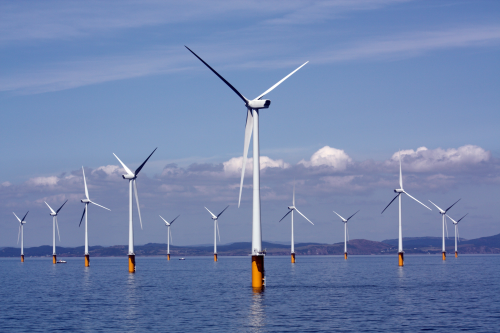
Wind energy has always been interesting to me and I never quite understood what types of regulations and research went into them. There are a bunch of factors such as wind currents, peak hours, location, and visibility, among others that show up when figuring out if an area is suitable or not for offshore wind farms.

On August 16th, 2013, the state of Illinois had passed the Lake Michigan Offshore Wind Energy Act. This act was to require the Illinois Department of Natural Resources (IDNR) to create a “detailed offshore wind energy siting matrix”. This matrix looked at the factors I just mentioned to determine if certain locations on Lake Michigan are adequate for offshore wind farms. Based on what the results of the siting matrix had shown, the IDNR was then able to allow the assessment permits and leases to those areas which were suitable. After the assessments had been completed, the authorization to convert said assessment permits and leases to construction and operations had happened.


The mode of government involved with this act is hierarchical. There will, eventually, be a market for the energy produced by these offshore wind farms, but the bill going through house and senate is the key factor. There aren’t really any NGOs at work here, but how would they? The lakebed is “owned” by the state, leases and permits for assessments are through the IDNR and the upkeep and maintenance is managed by the Economic Development Policy Task Force
.
There are a few actors involved in the creation of the LMOWEA. The state of Illinois itself, the IDNR and an Offshore Wind Energy Economic Development Policy Task Force. I don’t have much experience or knowledge in the creation of bills, acts and the like, but after seeing the brief synopsis of this individual act, it doesn’t leave much to the imagination of what other things that might have been overlooked.

This Offshore Wind Energy Economic Development Policy Task Force, which the LMOWEA actually created, is in charge of “analyzing and evaluating policy and economic options to facilitate the development of offshore wind energy and proposing an appropriate Illinois mechanism for purchasing and selling power.”

Kevin Borgia, the public policy manager at Wind on the Wires (which works with wind energy in the Midwest) said, “’we are light-years away from putting wind turbines in Lake Michigan.”

This is no surprise as EVERYTHING takes FOREVER to get done. The different stages of research, of authorizing leases and permits, converting them to construction, the calculations, the approvals/denials, and the construction.

I am just glad it is happening, because there are always those rich homeowners with a lakefront view who are extremely against the idea.


Monday, November 2, 2015

Dane County judge strikes down WE Energies new fees for customers with solar systems

On October 30th, 2015, a Dane County Circuit Court judge ruled that WE Energies is not allowed to assess extra fees on customers that generate some of their own electricity with home solar systems. This is a key example of traditional government using its power to further environmental sustainability and solidify renewable energy as a viable option for the near future. The charge imposed by WE Energies was supposed to be a so-called “rate-fairness” policy intended to make up for revenue lost to consumer generation. However, it appears far more like a punitive measure meant to discourage decentralized power sources outside of the power utility companies' monopolies. The program was widely unpopular with a broad section of the general population. The extra fees were to begin next year, but will not be implemented as things are currently. The lawsuit was filed by The Alliance for Solar Choice (www.allianceforsolarchoice.com), a collection of large rooftop solar companies. TASC has a variety of solar promotion projects across the country.

According to the Milwaukee Journal-Sentinel (), the rate increase would have come to roughly $19 per month for homes with average photovoltaic solar systems. This is a quite substantial price hike, and is about a quarter of the money saved by generating customers. These figures are provided by Renew Wisconsin (). PV systems are still fairly expensive, and it takes a significant amount of time to make them cost effective. This fee dramatically increases that time period, likely discouraging people from installing home solar panel systems. Other rate changes and increases are still going through.

The conflict between the new industry of renewable energy traditional utility companies and their market monopolies and allies in the fossil fuel extraction industry is quite obvious. WE Energies states that the increase is necessary to meet potential increased demands on the power grid due to CG customers using the normal grid when the solar systems are not generating, but those customers still pay for electricity they draw from the grid. Renewable advocates think that they are protecting their monopolized market share by discouraging leaving the old centralized power system, instead. The solar companies are, of course, not being altruistic. They would like to break into the power market and make potentially huge profits from their own products, but the average homeowner benefits greatly by having an alternative option for electricity generation. For renewable systems to really take off and threaten the utility monopolies, enough people need to be willing to take the leap, and making sure consumers are not punished for simple market choices is both a step toward solidifying the renewable industry and a victory for choice and open markets.

Monday, October 19, 2015

Grow Solar - A Midwest Partnership to Move Markets

A major part of the promotion of expansion and acceptance of renewable energy sources is the growth of profitable markets in the sector. A network of groups, both public and private, has been established with the aim of achieving this goal. Grow Solar () was initially founded in 2012 to reduce permit costs and provide financing for photovoltaic systems in Wisconsin, and has since expanded and is connected a network of partners from surrounding states. Grow Solar's focus has expanded to include helping to shape new permitting and zoning regulations more favorable to PV systems, building a workforce skilled in working with PV solar systems and working to build and improve standards and rules governing the solar industry. The regional network is working towards increased uniformity in regulations across the Midwest. Grow Solar is managed by the Midwest Renewable Energy Association, and so is based in rural Custer, Wisconsin, as well as having an office in Milwaukee. The MREA () manages many smaller initiatives in the region. Initial funding was provided by the Department of Energy's Sunshot program, a major initiative to promote and explore solar energy.

 Implementation of renewable energy sources can be made significantly more difficult and expensive by restrictive or complex zoning and permitting regulations and fees. The Grow Solar Toolkit is a resource provided to communities seeking to expand PV use, collecting information about zoning, permitting, and planning rules in place for local governments. This service helps speed and ease new green energy projects, focused on rooftop photovoltaic systems, by ensuring the sometimes arcane regulatory structure does not provide unexpected speed bumps. Similarly, Grow Solar provides technical aid with permitting and other regulations, as well as grid connection and metering, and the building of training programs. The aim is to ensure the future growth of PV solar and related industries.

The emerging renewable industry needs sufficient well-trained staff to establish itself as a viable alternative to fossil fuels. The MREA has substantial accredited training programs for PV, thermal solar, and small scale wind projects. The need for training and professional certification goes past simple installation and maintenance. Sites must be assessed for suitability and projects must be designed based on individual needs. Training is also available in working with regulations, zoning restrictions, and so on. Grow Solar and the MREA together also run training programs to teach updated standards and constantly changing regulatory issues to already trained contractors, salespeople, homeowners, renewable energy advocates, and so on. It is key that the workforce remain up to date with the ever-shifting technology and regulatory structure.

Grow Solar fills a necessary role in establishing the burgeoning green energy industry. They help to coordinate individual and city level projects with institutions at the state and greater Midwestern regional level, such as their parent organization, the Midwest Renewable Energy Association. The MREA, in turn, connects to larger groups such as the federal government and international organizations. These smaller projects are far more likely to be successful with this networked approach, with increased funding assistance and sharing of information, while allowing larger groups to have a more efficient structure of more grassroots-style groups and individuals doing the work on the ground.

Sunday, October 18, 2015

Renewable Energies - The Big Leap and A Formidable Contributer

Renewable Energies – The Big Leap

When you think of ways that we, as an expanding and consumer-focused society, contribute to climate change for better or for worse, energy consumption is what I think of first. The resources we are using and have been using since the industrial revolution, are a finite amount and will not be replenished in any of our lifetimes.
There are many players which contribute to making this large transition – this leap – into an even more ever growing world which uses new technologies which are more efficient by use of less fossil fuels or by eradicating the dependence of it completely via renewable energy sources. One of these players is the National Renewable Energy Laboratory (NREL), a government agency whose goal is to develop technologies and practices that are energy clean and efficient along with engineering and science related advances and providing innovations for integration at any scale. NREL resides in Golden, Colorado. Their laboratories and testing facilities are here, whilst they also have an office in Washington D.C. and they have been around since 1974.


In 2011, NREL developed a brief introductory pamphlet type of document to be shown at the 48th AiCARR International Conference (Italian Association aimed at plant reproduction of thermal energy). This small document has a lot of information packed into it regarding renewable energy sources. What I think makes this document more important than anything else I have seen is its focus of adapting these new technologies for buildings.
When I say buildings, I feel the need to elaborate; According to their introduction for the AiCARR, “Buildings account for approximately 40% of the worldwide annual energy consumption (WBCSD 2009).” I do not simply mean, outfitting old buildings with fluorescent lighting, carpets made from recyclable materials and furniture with some odd percent of biodegradable material. There is also much more than just solar panels and wind turbines, they have solar shingles for roofing, grid-tied communities, solar heating and ventilation and geothermal access; they even have an implementation plan for different ages of buildings.

NREL isn’t only working with other agencies and organizations to research new methods of implementation of renewable energy sources. Providing students in primary school special programs for learning more about the science and technology that goes into these energy solutions is a great way to spread knowledge. Teachers can also attend certain programs, a 5-day workshop that will teach them how to “integrate renewable energy and energy efficiency components into existing courses…”
Three facilities are owned and managed by NREL to help develop these new technologies. They are the National Bioenergy Center (NBC), National Center for Photovoltaics (NCP) and the National Wind Technology Center (NWTC). The NWTC also specializes in in advancing oceanic and freshwater power technologies and is home to their testing center of distributed energy resources (DERTF). This DERTF “includes generation, storage, and interconnection technologies as well as electric power system equipment capable of simulating a real-world electric system.”

Back to the transition. Buildings account for 40% of the energy consumed in the world. NREL helps develop technologies in renewable energy sources. They test their innovated devices and technologies in a multitude of ways for a bunch of different sectors. I would like to think they are a major actor, given the fact that they are attending international conferences in Italy about HVAC remedies of older buildings.
Information: